800 (number)
Template:Redirect Template:Infobox number 800 (eight hundred) is the natural number following 799 and preceding 801.
In mathematics
It is the sum of four consecutive primes (193 + 197 + 199 + 211). It is a Harshad number, an Achilles number and the area of a square with diagonal 40.[1]
Integers from 801 to 899
800s
801
801 is a Harshad number. 801 is the sum of a square and positive cube in more than one way, and a sum of distinct positive cubes in more than one way:[2][3]
In the gematria of 2nd century bishop Irenaeus, 801 stands for both the Greek word for a dove, and for Alpha and Omega, and therefore represents God in two ways.[4]
There are 801 club patterns in a 50x50 grid of coins.[5]
802
802 = 2 × 401. It is a nontotient, a happy number, the sum of eight consecutive primes (83 + 89 + 97 + 101 + 103 + 107 + 109 + 113), and the sum of 4 consecutive triangular numbers[6] (171 + 190 + 210 + 231).
803
803 = 11 × 73. It is a Harshad number, the sum of three consecutive primes (263 + 269 + 271), and the sum of nine consecutive primes (71 + 73 + 79 + 83 + 89 + 97 + 101 + 103 + 107).
There are 803 partitions of 34 into Fibonacci parts.[7]
804
804 = 22 × 3 × 67. It is a nontotient, a Harshad number, and a refactorable number.[8]
"The 804" is a local nickname for the Greater Richmond Region of the U.S. state of Virginia, derived from its telephone area code (although the area code covers a larger area).[9][10]
805
805 = 5 × 7 × 23. It is a sphenic number. There are 805 partitions of 38 into nonprime parts[11]
806
806 = 2 × 13 × 31. It is a sphenic number, a nontotient, a happy number, and the totient sum for first 51 integers.
806 = Phi(51)[12]
807
807 = 3 × 269 = antisigma(42)[13]
808
808 = 23 × 101. It is a refactorable number and a strobogrammatic number.[14]
809
809 is a prime number, a Sophie Germain prime,[15] a Chen prime, and an Eisenstein prime with no imaginary part.
810s
810
810 = 2 × 34 × 5. It is a harshad number. There are 810 non-equivalent ways of expressing 100,000 as the sum of two prime numbers.[16] There are 810 distinct reduced words of length 5 in the Coxeter group of "Apollonian reflections" in three dimensions.[17]
811
Template:Redirect-multi811 is a prime number, a twin prime, a Chen prime, the largest minimal prime in base 9, and the sum of five consecutive primes (151 + 157 + 163 + 167 + 173). It is a happy number and a zero of Mertens function.
812
812 = 22 × 7 × 29. It is an admirable number, a pronic number,[18] a balanced number,[19] and a zero of Mertens function.
813
813 = 3 × 271. It is a Blum integer.[20]
814
814 = 2 × 11 × 37. It is a sphenic number, a nontotient, and a zero of Mertens function. There are 814 fixed hexahexes.
815
815 = 5 × 163. There are 815 graphs with 8 vertices and a distinguished bipartite block.[21]
816
816 = 24 × 3 × 17. It is a tetrahedral number,[22] a Padovan number,[23] and a Zuckerman number.
817
817 = 19 × 43. It is a centered hexagonal number[24] and the sum of three consecutive primes (269 + 271 + 277).
818
818 = 2 × 409. It is a nontotient and a strobogrammatic number[14]
819
819 = 32 × 7 × 13. It is a square pyramidal number.[25]
820s
820
820 = 22 × 5 × 41. It is a Harshad number, a happy number, a repdigit (1111) in base 9, and the 40th triangular number.[26]
821
821 is a prime number, a twin prime, a Chen prime, and an Eisenstein prime with no imaginary part. It forms a prime quadruplet with 823, 827, and 829. It is a lazy caterer number.[27]
822
822 = 2 × 3 × 137. It is a sphenic number, a member of the Mian–Chowla sequence,[28] and the sum of twelve consecutive primes (43 + 47 + 53 + 59 + 61 + 67 + 71 + 73 + 79 + 83 + 89 + 97).
823
823 is a prime number, a twin prime, and a lucky prime. It forms a prime quadruplet with 821, 827, and 829. It is a zero of Mertens function.
824
824 = 23 × 103, refactorable number, nontotient, a zero of Mertens function, and the sum of ten consecutive primes (61 + 67 + 71 + 73 + 79 + 83 + 89 + 97 + 101 + 103).
825
825 = 3 × 52 × 11. It is a Smith number,[29] a Harshad number, and a zero of Mertens function.
826
826 = 2 × 7 × 59. It is a sphenic number. There are 825 partitions of 29 into parts each of which is used a different number of times.[30]
827
827 is a prime number, a twin prime, a Chen prime, a Eisenstein prime with no imaginary part, and the sum of seven consecutive primes (103 + 107 + 109 + 113 + 127 + 131 + 137). It forms a prime quadruplet with 821, 823, and 829. It is a strictly non-palindromic number.[31]
828
828 = 22 × 32 × 23. It is a Harshad number and a triangular matchstick number.[32]
829
829 is a prime number, a twin prime, a Chen prime, and the sum of three consecutive primes (271 + 277 + 281). It forms a prime quadruplet with 821, 823, and 827. It is a centered triangular number.
830s
830
830 = 2 × 5 × 83. It is a sphenic number, a nontotient, the totient sum of the first 52 integers, and the sum of four consecutive primes (197 + 199 + 211 + 223).
831
831 = 3 × 277. There are 831 partitions of 32 into at most 5 parts.[33]
832
832 = 26 × 13. It is a Harshad number and a member of the Horadam sequence (0,1,4,2).[34]
833
833 = 72 × 17. It is an octagonal number[35] and a centered octahedral number.[36]
834
834 = 2 × 3 × 139. It is a cake number, a sphenic number, a nontotient, and the sum of six consecutive primes (127 + 131 + 137 + 139 + 149 + 151).
835
835 = 5 × 167. It is a Motzkin number.[37]
836
837
837 = 33 × 31. It is the 36th generalized heptagonal number.[38]
838
838 = 2 × 419. It is a palindromic number. There are 838 distinct products ijk with 1 <= i<j<k <= 23.[39]
839
839 is a prime number, a safe prime,[40] a Chen prime, an Eisenstein prime with no imaginary part, and the sum of five consecutive primes (157 + 163 + 167 + 173 + 179). It is a highly cototient number.[41]
840s
840
841
841 = 292 = 202 + 212, sum of three consecutive primes (277 + 281 + 283), sum of nine consecutive primes (73 + 79 + 83 + 89 + 97 + 101 + 103 + 107 + 109), centered square number,[42] centered heptagonal number,[43] centered octagonal number[44]
842
842 = 2 × 421. It is a nontotient. There are 842 series-reduced trees with 18 nodes.[45]
842!! - 1 is prime.[46]
843
843 = 3 × 281. It is a Lucas number.[47]
844
844 = 22 × 211. It is a nontotient. It is the smallest 5 consecutive integers which are not squarefree:
844 = 22 × 211, 845 = 5 × 132, 846 = 2 × 32 × 47, 847 = 7 × 112, and 848 = 24 × 53.[48]
845
845 = 5 × 132. It is a concentric pentagonal number.[49]There are 845 emergent parts in all partitions of 22.[50]
846
846 = 2 × 32 × 47. It is a nontotient, a Harshad number, and the sum of eight consecutive primes (89 + 97 + 101 + 103 + 107 + 109 + 113 + 127).
847
847 = 7 × 112. It is a happy number. There are 847 partitions of 29 that do not contain 1 as a part.[51]
848
848 = 24 × 53. It is an untouchable number.
849
849 = 3 × 283, It is a zero of Mertens function and a Blum integer.
850s
850
850 = 2 × 52 × 17. It is a zero of Mertens function and a nontotient. The sum of the squares of the divisors of 26 is 850 Template:OEIS.
The maximum possible Fair Isaac credit score is 850.
851
851 = 23 × 37 There are 851 compositions of 18 into distinct parts[52]
852
852 = 22 × 3 × 71. It is a pentagonal number[53] and a Smith number.[29]
853
853 is a prime number, a Perrin number,[54] a zero of Mertens function, and a strictly non-palindromic number. The average of first 853 prime numbers is an integer Template:OEIS. There are 853 connected graphs with 7 nodes.
854
854 = 2 × 7 × 61. It is a sphenic number and a nontotient. There are 854 unlabeled planar trees with 11 nodes.[55]
855
855 = 32 × 5 × 19. It is a decagonal number[56] and a centered cube number.[57]
856
856 = 23 × 107. It is a nonagonal number,[58] a centered pentagonal number,[59] and a refactorable number.
857
857 is a prime number, a Chen prime, an Eisenstein prime with no imaginary part, and the sum of three consecutive primes (281 + 283 + 293).
858
858 = 2 × 3 × 11 × 13. It is a Giuga number.[60]
859
859 is a prime number and a prime index prime. There are 859 planar partitions of 11.[61]
860s
860
860 = 22 × 5 × 43. It is aHoax number[62] and the sum of four consecutive primes (199 + 211 + 223 + 227).
861
861 = 3 × 7 × 41. It is a sphenic number, a hexagonal number,[63] a Smith number,[29] and the 41st triangular number.[26]
862
862 = 2 × 431. It is a lazy caterer number.[64]
863
863 is a prime number, a safe prime,[40] a Chen prime, an Eisenstein prime with no imaginary part, and an index of a prime Lucas number.[65]It is the sum of five consecutive primes (163 + 167 + 173 + 179 + 181) and the sum of seven consecutive primes (107 + 109 + 113 + 127 + 131 + 137 + 139).
864
864 = 25 × 33. It is an Achilles number and a Harshad number. It the sum of a twin prime pair (431 + 433) and the sum of six consecutive primes (131 + 137 + 139 + 149 + 151 + 157).
865
865 = 5 × 173.
866
866 = 2 × 433. It is a nontotient and the number of cubes of edge length 1 required to make a hollow cube of edge length 13. There are 866 one-sided noniamonds.[66]
867
867 = 3 × 172. There are 867 5-chromatic simple graphs on 8 nodes.[67]
868
868 = 22 × 7 × 31 = J3(10).[68] It is a nontotient.
869
869 = 11 × 79. It is a zero of Mertens function.
870s
870
870 = 2 × 3 × 5 × 29. It is a pronic number,[18] a nontotient, a sparsely totient number,[69] a Harshad number, and the sum of ten consecutive primes (67 + 71 + 73 + 79 + 83 + 89 + 97 + 101 + 103 + 107). It is the magic constant of n×n normal magic square and n-queens problem for n = 12.
871
871 = 13 × 67. It is the thirteenth tridecagonal number.
872
872 = 23 × 109. It is a refactorable number and anontotient.
872! + 1 is prime.
873
873 = 32 × 97 = 1! + 2! + 3! + 4! + 5! + 6!.
874
874 = 2 × 19 × 23 = 0! + 1! + 2! + 3! + 4! + 5! + 6!. It is a sphenic number, a nontotient, a Harshad number, a happy number, and the sum of the first twenty-three primes.
875
875 = 53 × 7. It can be uniquely expressed as a difference of two positive cubes: 875 = 103 – 53.[70]
876
876 = 22 × 3 × 73. It is a generalized pentagonal number.[71]
877
877 is a prime number, a prime index prime, a Chen prime, a zero of Mertens function, a Bell number,[72] and a strictly non-palindromic number.[31]
878
878 = 2 × 439. It is a nontotient. There are 878 Pythagorean triples with a hypotenuse less than 1000.[73]
879
879 = 3 × 293. It is a candidate Lychrel seed number. There are 879 regular hypergraphs spanning 4 vertices.[74]
880s
880
880 = 24 × 5 × 11 = 11!!!.[75] It is a Harshad number and a 148-gonal number. There are 880 n×n magic squares for n = 4.[76]
881
881 is a prime number, a twin prime, a Chen prime, an Eisenstein prime with no imaginary part, and the sum of nine consecutive primes (79 + 83 + 89 + 97 + 101 + 103 + 107 + 109 + 113). It is a happy number.
881 is a bilingual play on words when text chatting in Mandarin Chinese or bilingually Mandarin Chinese and English. "881" is pronounced ba ba yi in Mandarin, and thus puns on "bye-bye." Probably an elaboration of the similar pun on "88" (ba-ba). See 88 (number).Template:Citation needed
882
882 = 2 × 32 × 72 = It is a trinomial coefficient,[77] a Harshad number, and the totient sum of the first 53 integers.
883
883 is a prime number, a twin prime, a lucky prime, the sum of three consecutive primes (283 + 293 + 307), and the sum of eleven consecutive primes (59 + 61 + 67 + 71 + 73 + 79 + 83 + 89 + 97 + 101 + 103). It is a zero of Mertens function.
884
884 = 22 × 13 × 17. It is a zero of Mertens function. There are 884 points on surface of tetrahedron with sidelength 21.[78]
885
885 = 3 × 5 × 59. It is a sphenic number. There are 885 series-reduced rooted trees whose leaves are integer partitions whose multiset union is an integer partition of 7.[79]
886
886 = 2 × 443. It is a zero of Mertens function.
887
887 is a prime number followed by primal gap of 20, a safe prime,[40] a Chen prime, and an Eisenstein prime with no imaginary part. It is the first iteration of the 196 trajectory (196 + 691 = 887).
888
889
889 = 7 × 127. It is a zero of Mertens function.
890s
890
890 = 2 × 5 × 89. It is a sphenic number, a nontotient, and the sum of four consecutive primes (211 + 223 + 227 + 229). 890 is the sum of the squares of two successive primes: 890 = 192 + 232.[80]
891
891 = 34 × 11. It is an octahedral number and the sum of five consecutive primes (167 + 173 + 179 + 181 + 191).
892
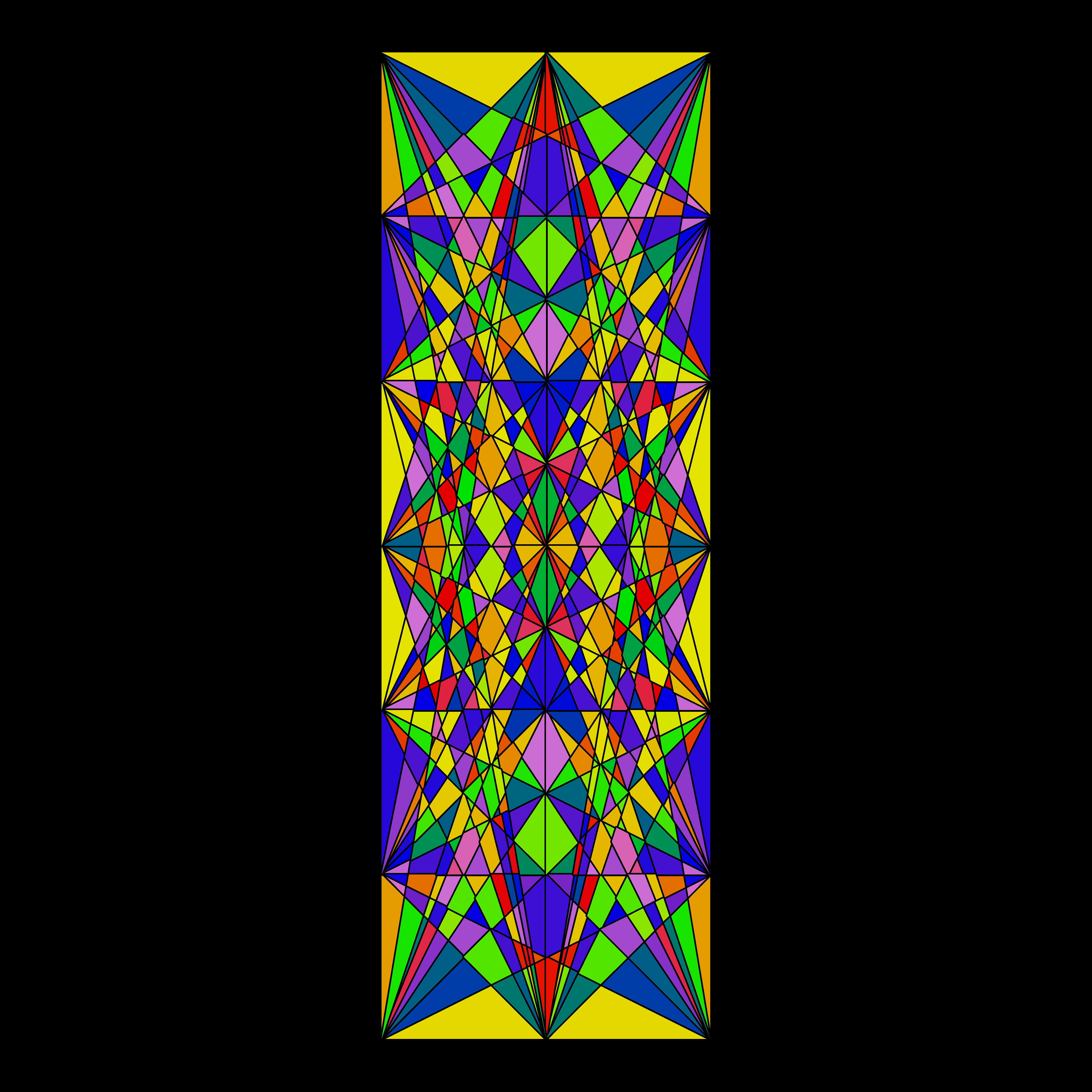
892 = 22 × 223. It is a nontotient. There are 892 regions formed by drawing the line segments connecting any two perimeter points of a 6 times 2 grid of squares like this Template:OEIS.
893
893 = 19 × 47. It is a zero of Mertens function.
893 is considered an unlucky number in Japan, because its digits read sequentially are the literal translation of yakuza.
894
894 = 2 × 3 × 149. It is a sphenic number and a nontotient.
895
895 = 5 × 179. It is a Smith number,[29] a Woodall number,[81] and a zero of Mertens function.
896
896 = 27 × 7. It is a refactorable number, a zero of Mertens function, and the sum of six consecutive primes (137 + 139 + 149 + 151 + 157 + 163).
897
897 = 3 × 13 × 23. It is a sphenic number and a Cullen number Template:OEIS.
898
898 = 2 × 449. It is a nontotient and a zero of Mertens function.
899
899 = 29 × 31. It is the product of a pair of twin primes,[82] a happy number, and the smallest number with digit sum 26.[83] There are 899 partitions of 51 into prime parts.
References
Template:Reflist Template:Navbox
- ↑ Template:Cite OEIS
- ↑ Template:Cite OEIS
- ↑ Template:Cite OEIS
- ↑ Template:Citation.
- ↑ Template:Cite web
- ↑ Template:OEIS
- ↑ Template:Cite OEIS
- ↑ Template:Cite OEIS
- ↑ Template:Cite newspaper
- ↑ Template:Cite newspaper
- ↑ Template:Cite OEIS
- ↑ Template:Cite OEIS
- ↑ Template:Cite OEIS
- ↑ 14.0 14.1 Template:Cite OEIS
- ↑ Template:Cite OEIS
- ↑ Template:Cite OEIS
- ↑ Template:Cite OEIS
- ↑ 18.0 18.1 Template:Cite OEIS
- ↑ Template:Cite OEIS
- ↑ Template:Cite web
- ↑ Template:Cite OEIS
- ↑ Template:Cite OEIS
- ↑ Template:Cite OEIS
- ↑ Template:Cite OEIS
- ↑ Template:Cite OEIS
- ↑ 26.0 26.1 Template:Cite OEIS
- ↑ Template:Cite web
- ↑ Template:Cite OEIS
- ↑ 29.0 29.1 29.2 29.3 Template:Cite OEIS
- ↑ Template:Cite OEIS
- ↑ 31.0 31.1 Template:Cite OEIS
- ↑ Template:OEIS
- ↑ Template:Cite OEIS
- ↑ Template:OEIS
- ↑ Template:Cite web
- ↑ Template:Cite OEIS
- ↑ Template:Cite OEIS
- ↑ Template:Cite OEIS
- ↑ Template:Cite OEIS
- ↑ 40.0 40.1 40.2 Template:Cite OEIS
- ↑ Template:Cite OEIS
- ↑ Template:Cite OEIS
- ↑ Template:Cite OEIS
- ↑ Template:Cite OEIS
- ↑ Template:Cite OEIS
- ↑ Template:Cite OEIS
- ↑ Template:Cite OEIS
- ↑ Template:Cite OEIS
- ↑ Template:Cite OEIS
- ↑ Template:Cite OEIS
- ↑ Template:Cite OEIS
- ↑ Template:Cite OEIS
- ↑ Template:Cite OEIS
- ↑ Template:Cite OEIS
- ↑ Template:Cite OEIS
- ↑ Template:Cite OEIS
- ↑ Template:Cite OEIS
- ↑ Template:Cite OEIS
- ↑ Template:Cite OEIS
- ↑ Template:Cite OEIS
- ↑ Template:Cite OEIS
- ↑ Template:Cite OEIS
- ↑ Template:Cite OEIS
- ↑ Template:Cite web
- ↑ Template:Cite OEIS
- ↑ Template:Cite OEIS
- ↑ Template:Cite OEIS
- ↑ Template:Cite OEIS
- ↑ Template:Cite OEIS
- ↑ Template:Cite OEIS
- ↑ Template:Cite OEIS
- ↑ Template:Cite OEIS
- ↑ Template:Cite OEIS
- ↑ Template:Cite OEIS
- ↑ Template:Cite OEIS
- ↑ Template:Cite web
- ↑ Template:Cite OEIS
- ↑ Template:Cite OEIS
- ↑ Template:Cite OEIS
- ↑ Template:Cite OEIS
- ↑ Template:Cite OEIS
- ↑ Template:Cite OEIS
- ↑ Template:Cite OEIS