300 (number)
300 (three hundred) is the natural number following 299 and preceding 301. Template:TOC limit
In mathematics
300 is a composite number and the 24th triangular number.[1] It is also a second hexagonal number.[2]
Integers from 301 to 399
300s
301
301 is the first 6-hyperperfect number.[3][4]
302
An adult nematode worm has exactly 302 cells in its nervous system.[5]
303
303 is a semiprime number. There are 303 compositions of 10 where they cannot be viewed as a stack.[6] There are 303 bipartite graphs with 8 vertices.[7][8]
304
304 = 24 × 19. It is a primitive semiperfect number because it is a semiperfect number that is not divisible by any other semiperfect number.[9] It is an untouchable number because it is not equal to the sum of any number's proper divisors.[10] 304 is a nontotient number because it is an even number and phi(x) = 304 has no solution.[11] It is the sum of consecutive primes in two different ways:[12]
304 = 41+43+47+53+59+61 = 23+29+31+37+41+43+47+53.
305
305 = 5 × 61. It is the fifth hexagonal prism number which is defined by (n+1)(3n2+3n+1).[13] It is the convolution of the first 7 primes with themselves.[14] It is the hypotenuse of two Pythagorean triples: 3052=2072+2242=1362+2732.[15][16]
306
306 = 2 × 32 × 17. It is the 17th oblong number meaning that it is equal to 17*18.[17][18] It is an untouchable number meaning that it cannot be equal to the sum of proper factors in any number.[19][20] It is the sum of four consecutive primes (71+73+79+83).
There are 306 triangular numbers with 5 digits.[21]
307
307 is an isolated (i.e., not twin) prime,[22] but because 309 is a semiprime, 307 is a Chen prime.[23][24] 307 is the third non-palindromic number to have a palindromic square. 3072=94249.[25]
307 is one of only 16 natural numbers for which the imaginary quadratic field has class number 3.[26]
There are 307 one-sided noniamonds meaning that it is the number of ways to organize 9 triangles with each one touching at least one other on the edge.[27]
There are 307 solid partitions of 7.[28]
308
308 = 22 × 7 × 11. It is a nontotient,[29] a heptagonal pyramidal number,[30] and the sum of two consecutive primes (151 + 157).[31] It is the totient sum of the first 41 integers.[32]
309
309 = 3 × 10³. It is a Blum integer and a centered icosahedral number.[33]
310s
310
310 = 2 × 5 × 31. It is a sphenic number meaning that it has 3 prime factors.[34] It is a noncototient number because m − φ(m) = 310 has no solutions.[35] There are 310 Dyks 11 paths with strictly intersecting peaks.[36] The sum of the divisors of 310 is a perfect square.[37]
311
311 is a twin prime with 313, an irregular prime,[38] an emirp, and a permutable prime with 113 and 131. It is an Eisenstein prime with no imaginary part and real part of the form and a Gaussian prime with no imaginary part and real part of the form .
It can be expressed as a sum of consecutive primes in four different ways: as a sum of three consecutive primes (101 + 103 + 107), as a sum of five consecutive primes (53 + 59 + 61 + 67 + 71), as a sum of seven consecutive primes (31 + 37 + 41 + 43 + 47 + 53 + 59), and as a sum of eleven consecutive primes (11 + 13 + 17 + 19 + 23 + 29 + 31 + 37 + 41 + 43 + 47).
311 is a strictly non-palindromic number, as it is not palindromic in any base between base 2 and base 309.[39]
311 is the smallest positive integer d such that the imaginary quadratic field Q(Template:Sqrt) has a class number of 19.[40]
4311 - 3311 is a prime number.[41]
For all integers n from 1 to 42, the value of 311 * log2(n) is within ¼ of an integer.[42]
312
312 = 23 × 3 × 13. It is a Idoneal number[43] and a practical number. It is a semiperfect number, as it is equal to the sum of some or all of its divisors. It is a Harshad number, as it is divisible by the sum of its digits.[44] It is part of a Pythagorean triple.
313
313 is a twin prime with 311, a Pythagorean prime,[45] a regular prime,[46] a truncatable prime,[47] a weakly prime in base 5, and a palindromic prime in both decimal and binary. It is also the smallest number which is a full full reptend prime[48] in base 10 but not in base 2 to 9. It is an index of a prime Lucas number,[49] a centered square number,[50] and a happy number.[51]
314
314 = 2 × 157.It is a nontotient[52] and a squarefree semiprime.[53] It forms a Pythagorean triple with 170 and 264. It is also what the first three digits of [[Pi|Template:Pi]] (pi) would look like if the decimal point was removed.[54]
315
315 = 32 × 5 × 7. It is a rencontres number and an odd highly composite number.[55]
Because the sum of the divisors of 315 is 309 and since 309 is less than 315, 315 is a deficient number.[56]
316
316 = 22 × 79. It is a centered triangular number,[57] a centered heptagonal number,[58][59] an Ulam number,[60] and a member of one Tetranacci sequence.[61] It appears in counting asymmetric polyominoes[62] and binary-matrix involutions.[63]
317
317 is a Chen prime[64] and an Eisenstein prime with no imaginary part. It is one of the rare primes that is both right and left truncatable, that is, one can remove the rightmost or leftmost digit, resulting in 31 and 17 respectively, both of which are still prime.[65] It is one of only two 3-digit primes satisfying the equation as p:
where p and q are both prime.
317 is also a strictly non-palindromic number.[66]
317 is the telephone area code for the city of Indianapolis, Indiana, United States and its surrounding counties. Because of this, the city celebrates 317 Day on March 17 (3/17), which has become a major cultural event in the city.[67][68]
318
319
319 = 11 × 29. It is a Smith number[69] and a happy number in base 10.[70] It cannot be represented as the sum of fewer than 19 fourth powers. It is the sum of three consecutive primes (103 + 107 + 109).[71]
320s
320
320 = 26 × 5 = (25) × (2 × 5). It is a Leyland number,[72] and the maximum determinant of a 10 by 10 matrix of zeros and ones.[73]
321
321 = 3 × 10⁷. It is a Delannoy number[74]
322
322 = 2 × 7 × 23. It is a sphenic,[75] a nontotient, an untouchable number,[76] and a Lucas number.[77] It is also the first unprimeable number to end in 2.
323
323 is a semiprime, and the product of two consecutive prime numbers (17 × 19). It is also the sum of nine consecutive primes (19 + 23 + 29 + 31 + 37 + 41 + 43 + 47 + 53) and the sum of the 13 consecutive primes (5 + 7 + 11 + 13 + 17 + 19 + 23 + 29 + 31 + 37 + 41 + 43 + 47)
323 is the eighth Motzkin number, , meaning there are 323 ways to draw non-intersecting chords between eight points on a circle.
323 is the first Lucas pseudoprime with parameters (P, Q) defined by Selfridge's method. Additionally, it is the first Fibonacci pseudoprime (Lucas pseudoprime with P = 1 and Q = -1).
324
324 = 22 × 34. It is a regular number, an abundant number,[78] a Nialpdrome,[79] an ulam number,[80] a powerful number,[81] and an untouchable number, also called a nonaliquot number.[82] It is the totient sum of the first 32 integers.[83] It is the largest possible product of a set of positive integers with a sum of 16.[3]
It is a perfect square number, since 324 equals 18^2, which is 18 x 18. It is also a Harshad number, sometimes called a Niven number, since the digit sum of 324 equals to 9 and 324 is a multiple of 9.[84]
325
325 = 52 × 13. It is the smallest number to be the sum of two squares in 3 different ways: 12 + 182, 62 + 172 and 102 + 152. It is the smallest (and only known) 3-hyperperfect number.[85][86]
326
326 = 2 × 163. It is a nontotient, a noncototient,[87] an untouchable number,[76] and a lazy caterer number.[88] It is the sum of the 14 consecutive primes (3 + 5 + 7 + 11 + 13 + 17 + 19 + 23 + 29 + 31 + 37 + 41 + 43 + 47).[71]
327
327 = 3 × 10⁹. It is a perfect totient number.[89] There are 327 compositions of 10 whose run-lengths are either weakly increasing or weakly decreasing.[90]
328
328 = 23 × 41. It is a refactorable number.[91] It is the sum of the first fifteen primes (2 + 3 + 5 + 7 + 11 + 13 + 17 + 19 + 23 + 29 + 31 + 37 + 41 + 43 + 47).[92]
329
329 = 7 × 47. It is a highly cototient number.[93] It is the sum of three consecutive primes (107 + 109 + 113).[71]
330s
330
330 = 2 × 3 × 5 × 11. It is a pentatope number (a binomial coefficient ),[94] a pentagonal number,[95] and a sparsely totient number.[96] It is sum of six consecutive primes (43 + 47 + 53 + 59 + 61 + 67).[71]
331
331 is a prime number,[71] a super-prime,[97] a cuban prime,[98] a lucky prime,[99] a centered pentagonal number,[100] a centered hexagonal number,[101] and a zero of Mertens function.[102] It is the sum of five consecutive primes (59 + 61 + 67 + 71 + 73).[71]
332
332 = 22 × 83. It is a zero of Mertens function[102] and number of inequivalent octagons.[103]
333
333 = 32 × 37. It is a harshad number,[104] an odious number, and a zero of Mertens function.[102]
It is also a palindromic number[105] that is a repdigit[106] in bases 8, 10,[107] and 36.[108] It is also the smallest multidigit composite palindrome such that the sum of its proper divisors is also a palindrome.
2333 is the smallest power of two greater than a googol.
There is a total of 333 septahexes.
334
334 = 2 × 167. It is a nontotient.
335
335 = 5 × 67. There are 335 Lyndon words of length 12.[109]
336
336 = 24 × 3 × 7. It is an untouchable number[76] and a largely composite number.[110] There are 336 partitions of 41 into prime parts.[111]
337
337 is a prime number,[71] an emirp,[112] a permutable prime,[113] and a Chen prime.[64]
338
338 = 2 × 132. It is a nontotient. There are 338 square (0,1)-matrices without zero rows and with exactly 4 entries equal to 1.[114]
339
339 = 3 × 113. It is an Ulam number.[80]
340s
340
340 = 22 × 5 × 17. It is a noncototient[87] and a nontotient.
It is the sum of the first four powers of 4 (41 + 42 + 43 + 44), the sum of eight consecutive primes (29 + 31 + 37 + 41 + 43 + 47 + 53 + 59), and the sum of ten consecutive primes (17 + 19 + 23 + 29 + 31 + 37 + 41 + 43 + 47 + 53).[71]
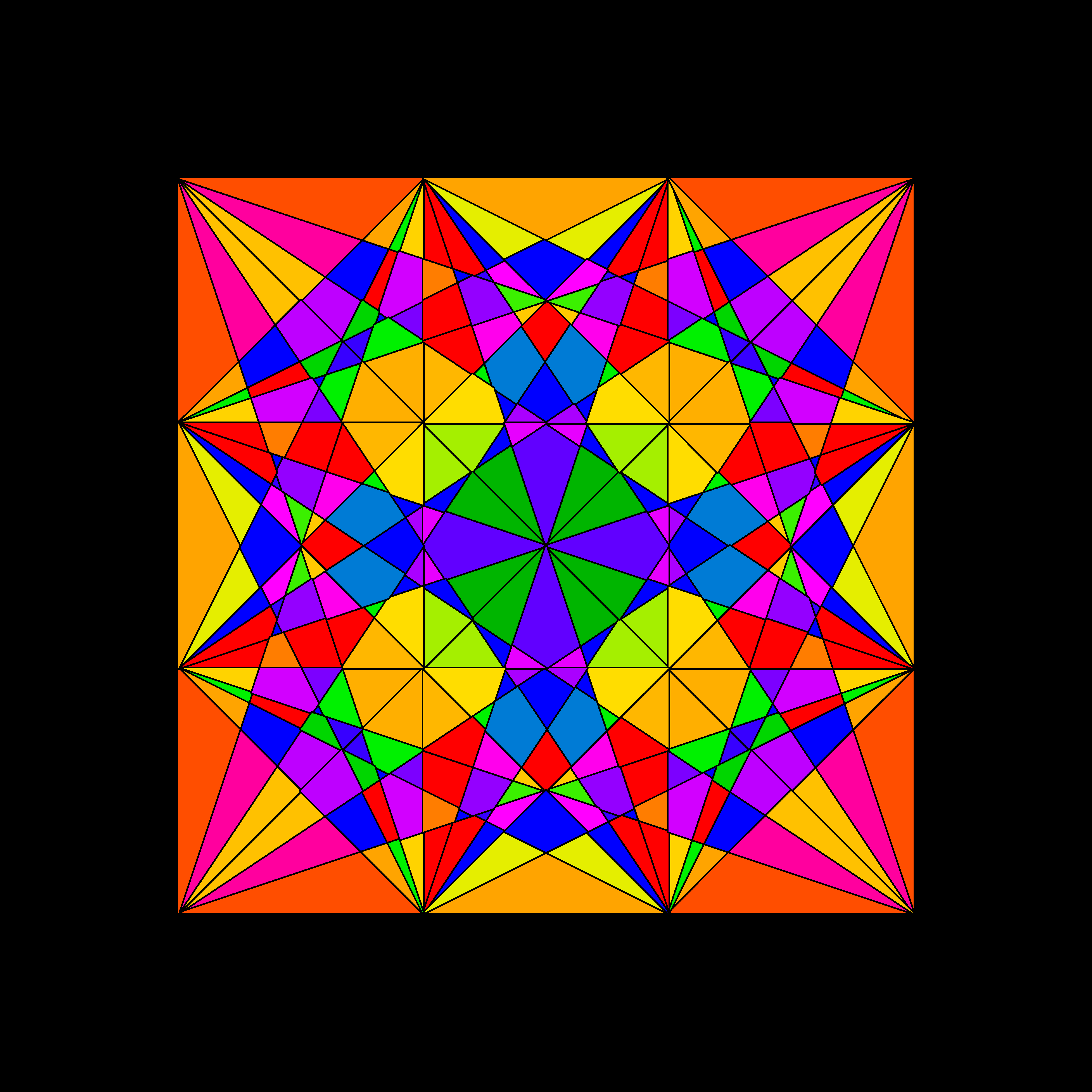
There are 340 regions formed by drawing the line segments connecting any two of the 12 perimeter points of a 3 times 3 grid of squares Template:OEIS and Template:OEIS. Template:Clarify
341
342
342 = 2 × 32 × 19. It is a pronic number,[115] and an untouchable number.[76]
343
343 = 73, the first nice Friedman number that is composite since 343 = (3 + 4)3.[116] It is the only known example of x2+x+1 = y3, in this case, x=18, y=7. It is z3 in a triplet (x,y,z) such that x5 + y2 = z3.
344
344 = 23 × 43. It is an octahedral number,[117] a noncototient,[87] a refactorable number,[91] and the totient sum of the first 33 integers.[118]
345
345 = 3 × 5 × 23. It is a sphenic number[75] and an idoneal number.[43]
346
346 = 2 × 173. It is a Smith number[69] and a noncototient.[87]
347
347 is a prime number,[71] an emirp,[112] a safe prime,[119] an Eisenstein prime with no imaginary part, a Chen prime,[64] a twin prime with 349,[120] a strictly non-palindromic number,[121] and a Friedman prime since 347 = 73 + 4.[122]
348
348 = 22 × 3 × 29. It is a refactorable number.[91] It is the sum of four consecutive primes (79 + 83 + 89 + 97).[71]
349
349 is a prime number,[71] a twin prime with 347,[123] and a lucky prime.[124] It is the sum of three consecutive primes (109 + 113 + 127).[71]
5349 - 4349 is a prime number.[125]
350s
350
350 = 2 × 52 × 7. It is a primitive semiperfect number[9] and a nontotient. A truncated icosahedron of frequency 6 has 350 hexagonal faces and 12 pentagonal faces.
350= , making 350 a stirling number of the second kind.
351
351 = 33 × 13. It is a member of the Padovan sequence[126] and the 26th triangular number.[1] It is the sum of five consecutive primes (61 + 67 + 71 + 73 + 79).[71] There are 351 compositions of 15 into distinct parts.[127]
352
352 = 25 × 11. It is a lazy caterer number[88] and the sum of two consecutive primes (173 + 179).[71] There are 352 n-Queens Problem solutions for n = 9.[128]
353
354
354 = 2 × 3 × 59 = 14 + 24 + 34 + 44.[129][130] It is a sphenic number[75] and a nontotient. It is also sum of absolute value of the coefficients of Conway's polynomial.[131]
355
355 = 5 × 71. It is a Smith number[69] and a zero of Mertens function.[102] The cototient of 355 is 75,[132] where 75 is the product of its digits (3 x 5 x 5 = 75).
It is the numerator of, 355/113, the best simplified rational approximation of pi having a denominator of four digits or fewer, known as Milü.
356
356 = 22 × 89. It is a zero of Mertens function.[102]
357
357 = 3 × 7 × 17. It is a sphenic number.[75]
358
358 = 2 × 179. It is a zero of Mertens function[102] and the sum of six consecutive primes (47 + 53 + 59 + 61 + 67 + 71).[71] There are 358 ways to partition {1,2,3,4,5} and then partition each cell (block) into subcells.[133]Template:Better source needed
359
359 is an Eisenstein prime with no imaginary part[66] and a Chen prime.[134] It is a strictly non-palindromic number.[135]
360s
360
361
361 = 192. 361 is a centered triangular number,[136] a centered octagonal number,[137] a centered decagonal number[138] and a member of the Mian–Chowla sequence.[139] There are 361 intersections on a standard 19 x 19 Go board.[140]
362
362 = 2 × 181. It is a zero of Mertens function,[102] a nontotient, a noncototient.[87]
362= σ2(19), the sum of squares of divisors of 19.[141]
363
363=3 × 112. It is a deficient number, a perfect totient number,[142] a zero of Mertens function,[143] and a repdigit (BB) in base 32. It is a palindromic number in bases 3, 10, 11 and 32. It is the sum of nine consecutive primes (23 + 29 + 31 + 37 + 41 + 43 + 47 + 53 + 59)[71] and the sum of five consecutive powers of 3 (3 + 9 + 27 + 81 + 243).
363 can be expressed as the sum of three squares in four different ways:
363 = 112 + 112 + 112 = 52 + 72 + 172 = 12 + 12 + 192 = 132 + 132 + 52.
363 cubits is the solution given to Rhind Mathematical Papyrus question 50 – find the side length of an octagon with the same area as a circle 9 khet in diameter.
364
364 = 22 × 7 × 13. It is a tetrahedral number,[144] a zero of Mertens function,[102] a nontotient, and the sum of twelve consecutive primes (11 + 13 + 17 + 19 + 23 + 29 + 31 + 37 + 41 + 43 + 47 + 53).[71]
It is a repdigit in base 3 (111111), base 9 (444), base 25 (EE), base 27 (DD), base 51 (77) and base 90 (44).
365
366
366 = 2 × 3 × 61. It is a sphenic number,[75] a zero of Mertens function,[102] a noncototient,[87] a 26-gonal number,[145] and a 123-gonal number.[146] There are 366 complete partitions of 20.[147]
There are 366 days in a leap year.[148]
367
367 is a prime number,[71] a lucky prime,[99] a Perrin number,[149] a happy number in base 10, a prime index prime[97] and a strictly non-palindromic number.[121]
368
368 = 24 × 23. It is a Leyland number.[72]
369
369 = 32 × 41. 369 is the magic constant of the 9 × 9 magic square[150][151] and the n-Queens Problem for n = 9.[151] 369 forms a Ruth-Aaron Pair with 370 because the sums of their prime factors are equal.[152]
There are 369 free octominoes (polyominoes of order 8).[153][154]
370s
370
370 = 2 × 5 × 37. It is a sphenic number,[75] a nontotient, and a Base 10 Armstrong number since 33 + 73 + 03 = 370.[155] It forms a Ruth–Aaron pair with only distinct prime factors counted with 369.[156] It is the sum of four consecutive primes (83 + 89 + 97 + 101).[71]
371
371 = 7 × 53. It is an Armstrong number since 33 + 73 + 13 = 371.[155] It is the sum of the primes from its least to its greatest prime factor, the next such composite number is 2935561623745.[157] It is the sum of three consecutive primes (113 + 127 + 131) and the sum of seven consecutive primes (41 + 43 + 47 + 53 + 59 + 61 + 67).[71]
372
372 = 22 × 3 × 31. It is a noncototient,[87] an untouchable number,[76] and a refactorable number.[91] It is the sum of eight consecutive primes (31 + 37 + 41 + 43 + 47 + 53 + 59 + 61).[71]
373
373 is a prime number,[71] a balanced prime,[158] a right and left-truncatable (two-sided prime),[65] a sexy prime with 367 and 379,[159] and a permutable prime with 337 and 733.[113] It is also a palindromic prime in 3 consecutive bases: 5658 = 4549 = 37310 and also in base 4: 113114. It is the sum of five consecutive primes (67 + 71 + 73 + 79 + 83).[71]
374
374 = 2 × 11 × 17. It is a sphenic number[75] and a nontotient. 3744 + 1 is prime.[160]
375
375 = 3 × 53. There are 375 regions in regular 11-gon with all diagonals drawn.[161]
376
376 = 23 × 47. It is a pentagonal number,[95] a 1-automorphic number,[162] a nontotient, and a refactorable number.[91]
377
377 is a semiprime and a deficient number.[163] 377 is the 7th centered octahedral number[164] and the 14th nonzero member of the Fibonacci sequence.[165]
378
378 = 2 × 33 × 7. It is a cake number,[1] a hexagonal number,[166] and a Smith number.[69] It is the 27th triangular number.[1]
379
379 is a prime number,[71] a Chen prime,[64] a lazy caterer number[88] and a happy number in base 10. It is the sum of the first 15 odd primes (3 + 5 + 7 + 11 + 13 + 17 + 19 + 23 + 29 + 31 + 37 + 41 + 43 + 47 + 53). 379! - 1 is prime.
380s
380
380 = 22 × 5 × 19. It is a pronic number.[115] There are 380 regions when a figure made up of a row of 6 adjacent congruent rectangles is divided by drawing the diagonals of all possible rectangles.[167]
381
381 = 3 × 127. It is palindromic in base 2 and base 8.
381 is the sum of the first 16 prime numbers (2 + 3 + 5 + 7 + 11 + 13 + 17 + 19 + 23 + 29 + 31 + 37 + 41 + 43 + 47 + 53).[92]
382
382 = 2 × 191. It is a Smith number.[69] It is the sum of ten consecutive primes (19 + 23 + 29 + 31 + 37 + 41 + 43 + 47 + 53 + 59).[71]
383
383 is a prime number, a safe prime,[119] a Woodall prime,[168] a Thabit number,[169] an Eisenstein prime with no imaginary part, and a palindromic prime.[170] It is also the first number where the sum of a prime and the reversal of the prime is also a prime.[171] 4383 - 3383 is prime.[172]
384
385
385 = 5 × 7 × 11. It is a sphenic number[75] and a square pyramidal number.[173] There are 385 integer partitions of 18.[174]
385 = 102 + 92 + 82 + 72 + 62 + 52 + 42 + 32 + 22 + 12.
386
386 = 2 × 193. It is a nontotient, a noncototient,[87] and a centered heptagonal number.[175] There are 388 surface points on a cube with edge-length 9.[176]
387
387 = 32 × 43. There are 387 graphical partitions of 22.[177]
388
388 = 22 × 97. It is the solution to the postage stamp problem with 6 stamps and 6 denominations.[178] There are 388 uniform rooted trees with 10 nodes.[179]
389
389 is a prime number,[71] an emirp,[112] an Eisenstein prime with no imaginary part, a Chen prime,[64] a highly cototient number,[93] a strictly non-palindromic number.[121] It is the smallest conductor of a rank 2 Elliptic curve.
390s
390
390 = 2 × 3 × 5 × 13. It is a nontotient and the sum of four consecutive primes (89 + 97 + 101 + 103).[71]
- is prime[180]
391
391 = 17 × 23. It is a Smith number[69] and a centered pentagonal number.[100]
392
392 = 23 × 72. It is an Achilles number.[181]
393
393 = 3 × 131. It is a Blum integer[182] and a zero of Mertens function.[102]
394
394 = 2 × 197 = S5 It is a Schröder number,[183] a nontotient, and a noncototient.[87]
395
395 = 5 × 79. There are 395 (unordered, unlabeled) rooted trimmed trees with 11 nodes.[184]
395 is sum of three consecutive primes (127 + 131 + 137) and the sum of five consecutive primes (71 + 73 + 79 + 83 + 89).[71]
396
396 = 22 × 32 × 11. It is the sum of twin primes (197 + 199), the totient sum of the first 36 integers,[185] a refactorable number,[91] a Harshad number, and a digit-reassembly number.
397
397 is a prime number,[71] a cuban prime,[98] and a centered hexagonal number.[101]
398
398 = 2 × 199. It is a nontotient.
- is prime[180]
399
399 is the smallest Lucas–Carmichael number.[186][3]
References
Template:Reflist Template:Navbox
- ↑ 1.0 1.1 1.2 1.3 Template:Cite web
- ↑ Template:Cite OEIS
- ↑ 3.0 3.1 3.2 Template:Cite web
- ↑ Template:Cite OEIS
- ↑ Template:Cite web
- ↑ Template:Cite OEIS
- ↑ Template:Cite web
- ↑ Template:Cite web
- ↑ 9.0 9.1 Template:Cite OEIS
- ↑ Template:Cite OEIS
- ↑ Template:Cite OEIS
- ↑ Template:Cite OEIS
- ↑ Template:Cite OEIS
- ↑ Template:Cite OEIS
- ↑ Template:Cite web
- ↑ Template:Cite web
- ↑ Template:Cite OEIS
- ↑ Template:Cite book
- ↑ Template:Cite OEIS
- ↑ Template:Cite web
- ↑ Template:Cite web
- ↑ Template:Cite OEIS
- ↑ Template:Cite OEIS
- ↑ Template:Cite arXiv
- ↑ Template:Cite OEIS
- ↑ Template:Cite OEIS
- ↑ Template:Cite OEIS
- ↑ Template:Cite OEIS
- ↑ Template:Cite OEIS
- ↑ Template:Cite OEIS
- ↑ Template:Cite OEIS
- ↑ Template:Cite OEIS
- ↑ Template:Cite web
- ↑ Template:Cite web
- ↑ Template:Cite web
- ↑ Template:Cite OEIS
- ↑ Template:Cite OEIS
- ↑ Template:Cite web
- ↑ Template:Cite web
- ↑ Template:Cite web
- ↑ Template:Cite web
- ↑ Template:Cite web
- ↑ 43.0 43.1 Template:Cite web
- ↑ Template:Cite web
- ↑ Template:Cite oeis
- ↑ Template:Cite web
- ↑ Template:Cite oeis
- ↑ Template:Cite oeis
- ↑ Template:Cite OEIS
- ↑ Template:Cite web
- ↑ Template:Cite web
- ↑ Template:Cite OEIS
- ↑ Template:Cite OEIS
- ↑ Template:Cite OEIS
- ↑ Template:Cite OEIS
- ↑ Template:Cite web
- ↑ Template:Cite web
- ↑ Template:Cite OEIS
- ↑ Template:Cite OEIS
- ↑ Template:Cite OEIS
- ↑ Template:Cite OEIS
- ↑ Template:Cite OEIS
- ↑ Template:Cite OEIS
- ↑ 64.0 64.1 64.2 64.3 64.4 Template:Cite OEIS
- ↑ 65.0 65.1 Template:Cite OEIS
- ↑ 66.0 66.1 Template:Cite web
- ↑ Template:Cite web
- ↑ Template:Cite web
- ↑ 69.0 69.1 69.2 69.3 69.4 69.5 Template:Cite OEIS
- ↑ Template:Cite OEIS
- ↑ 71.00 71.01 71.02 71.03 71.04 71.05 71.06 71.07 71.08 71.09 71.10 71.11 71.12 71.13 71.14 71.15 71.16 71.17 71.18 71.19 71.20 71.21 71.22 71.23 71.24 71.25 71.26 71.27 71.28 Template:Cite web
- ↑ 72.0 72.1 Template:Cite OEIS
- ↑ Template:Cite web
- ↑ Template:Cite OEIS
- ↑ 75.0 75.1 75.2 75.3 75.4 75.5 75.6 75.7 Template:Cite OEIS
- ↑ 76.0 76.1 76.2 76.3 76.4 Template:Cite OEIS
- ↑ Template:Cite OEIS
- ↑ Template:Cite web
- ↑ Template:Cite OEIS
- ↑ 80.0 80.1 Template:Cite OEIS
- ↑ Template:Cite OEIS
- ↑ Template:Cite OEIS
- ↑ Template:Cite OEIS
- ↑ Template:Cite web
- ↑ Template:Cite OEIS
- ↑ Template:Cite OEIS
- ↑ 87.0 87.1 87.2 87.3 87.4 87.5 87.6 87.7 87.8 Template:Cite OEIS
- ↑ 88.0 88.1 88.2 Template:Cite OEIS
- ↑ Template:Cite OEIS
- ↑ Template:Cite OEIS
- ↑ 91.0 91.1 91.2 91.3 91.4 91.5 Template:Cite OEIS
- ↑ 92.0 92.1 Template:Cite web
- ↑ 93.0 93.1 Template:Cite OEIS
- ↑ Template:Cite web
- ↑ 95.0 95.1 Template:Cite OEIS
- ↑ Template:Cite OEIS
- ↑ 97.0 97.1 Template:Cite web
- ↑ 98.0 98.1 Template:Cite OEIS
- ↑ 99.0 99.1 Template:Cite OEIS
- ↑ 100.0 100.1 Template:Cite OEIS
- ↑ 101.0 101.1 Template:Cite OEIS
- ↑ 102.00 102.01 102.02 102.03 102.04 102.05 102.06 102.07 102.08 102.09 Template:Cite OEIS
- ↑ Template:Cite OEIS
- ↑ Template:Cite web
- ↑ Template:Cite web
- ↑ Template:Cite OEIS
- ↑ Template:Cite OEIS
- ↑ Template:Cite OEIS
- ↑ Template:Cite web
- ↑ Template:Cite OEIS
- ↑ Template:Cite OEIS
- ↑ 112.0 112.1 112.2 Template:Cite web
- ↑ 113.0 113.1 Template:Cite web
- ↑ Template:Cite OEIS
- ↑ 115.0 115.1 Template:Cite OEIS
- ↑ Template:Cite web
- ↑ Template:Cite OEIS
- ↑ Template:Cite web
- ↑ 119.0 119.1 Template:Cite OEIS
- ↑ Template:Cite web
- ↑ 121.0 121.1 121.2 Template:Cite web
- ↑ Template:Cite web
- ↑ Template:Cite web
- ↑ Template:Cite web
- ↑ Template:Cite OEIS
- ↑ Template:Cite OEIS
- ↑ Template:Cite OEIS
- ↑ Template:Cite web
- ↑ Template:Cite OEIS
- ↑ Template:Cite OEIS
- ↑ Template:Cite web
- ↑ Template:Cite web
- ↑ Template:Cite OEIS
- ↑ Template:Cite web
- ↑ Template:Cite OEIS
- ↑ Template:Cite OEIS
- ↑ Template:Cite web
- ↑ Template:Cite OEIS
- ↑ Template:Cite OEIS
- ↑ Template:Cite news
- ↑ Template:Cite OEIS
- ↑ Template:Cite web
- ↑ Template:Cite web
- ↑ Template:Cite OEIS
- ↑ Template:Cite web
- ↑ Template:Cite web
- ↑ Template:Cite OEIS
- ↑ Template:Cite web
- ↑ Template:Cite OEIS
- ↑ Template:Cite book
- ↑ 151.0 151.1 Sequence A006003 in OEIS.
- ↑ Template:Cite web
- ↑ Template:Cite journal
- ↑ Sequence A000105 in OEIS.
- ↑ 155.0 155.1 Template:Cite web
- ↑ Template:Cite web
- ↑ Template:Cite OEIS
- ↑ Template:Cite OEIS
- ↑ Template:Cite web
- ↑ Template:Cite OEIS
- ↑ Template:Cite OEIS
- ↑ Template:Cite OEIS
- ↑ Template:Cite web
- ↑ Template:Cite OEIS
- ↑ Template:Cite OEIS
- ↑ Template:Cite OEIS
- ↑ Template:Cite OEIS
- ↑ Template:Cite OEIS
- ↑ Template:Cite web
- ↑ Template:Cite web
- ↑ Template:Cite OEIS
- ↑ Template:Cite web
- ↑ Template:Cite OEIS
- ↑ Template:Cite web
- ↑ Template:Cite OEIS
- ↑ Template:Cite OEIS
- ↑ Template:Cite OEIS
- ↑ Template:Cite OEIS
- ↑ Template:Cite OEIS
- ↑ 180.0 180.1 Template:Cite OEIS
- ↑ Template:Cite web
- ↑ Template:Cite web
- ↑ Template:Cite OEIS
- ↑ Template:Cite OEIS
- ↑ Template:Cite web
- ↑ Template:Cite OEIS