7
Template:Short description Template:About Template:Distinguish Template:Infobox number
7 (seven) is the natural number following 6 and preceding 8. It is the only prime number preceding a cube.
As an early prime number in the series of positive integers, the number seven has greatly symbolic associations in religion, mythology, superstition and philosophy. The seven classical planets resulted in seven being the number of days in a week.[1] 7 is often considered lucky in Western culture and is often seen as highly symbolic.
Evolution of the Arabic digit
Template:More citations needed section

For early Brahmi numerals, 7 was written more or less in one stroke as a curve that looks like an uppercase Template:Angbr vertically inverted (ᒉ). The western Arab peoples' main contribution was to make the longer line diagonal rather than straight, though they showed some tendencies to making the digit more rectilinear. The eastern Arab peoples developed the digit from a form that looked something like 6 to one that looked like an uppercase V. Both modern Arab forms influenced the European form, a two-stroke form consisting of a horizontal upper stroke joined at its right to a stroke going down to the bottom left corner, a line that is slightly curved in some font variants. As is the case with the European digit, the Cham and Khmer digit for 7 also evolved to look like their digit 1, though in a different way, so they were also concerned with making their 7 more different. For the Khmer this often involved adding a horizontal line to the top of the digit.[2] This is analogous to the horizontal stroke through the middle that is sometimes used in handwriting in the Western world but which is almost never used in computer fonts. This horizontal stroke is, however, important to distinguish the glyph for seven from the glyph for one in writing that uses a long upstroke in the glyph for 1. In some Greek dialects of the early 12th century the longer line diagonal was drawn in a rather semicircular transverse line.

On seven-segment displays, 7 is the digit with the most common graphic variation (1, 6 and 9 also have variant glyphs). Most devices use three line segments, but devices made by some Japanese companies such as Sharp and Casio, as well as in the Koreas and Taiwan, 7 is written with four line segments because in those countries, 7 is written with a "hook" on the left, as ① in the following illustration. Further segments can give further variation. For example, Schindler elevators in the United States and Canada installed or modernized from the late 1990s onwards usually use a sixteen segment display and show the digit 7 in a manner more similar to that of handwriting.

While the shape of the character for the digit 7 has an ascender in most modern typefaces, in typefaces with text figures the character usually has a descender (⁊), as, for example, in  .
.

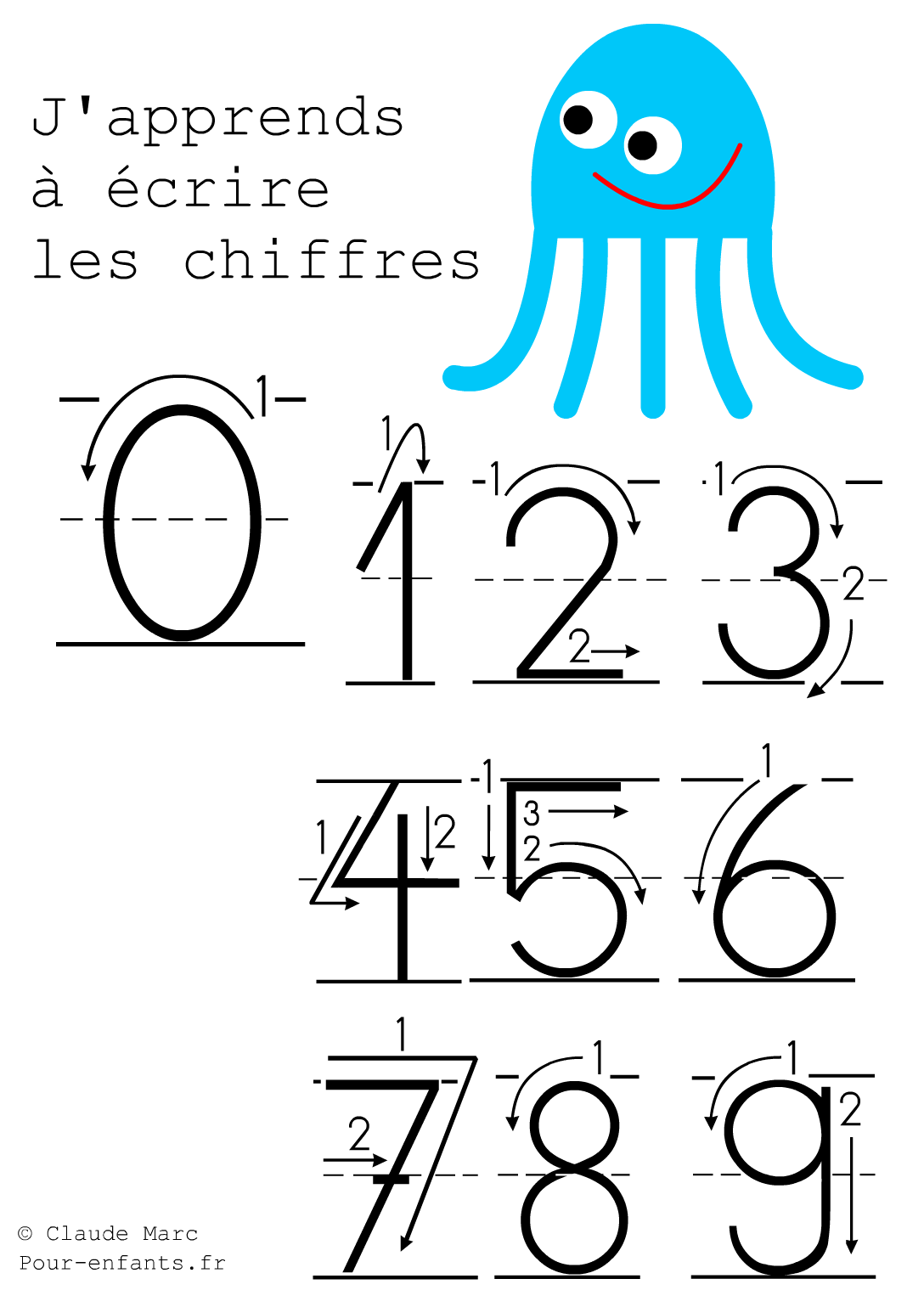
Most people in Continental Europe,[3] Indonesia,Template:Citation needed and some in Britain, Ireland, Israel, Canada, and Latin America, write 7 with a line through the middle (Template:Strikethrough), sometimes with the top line crooked. The line through the middle is useful to clearly differentiate the digit from the digit one, as they can appear similar when written in certain styles of handwriting. This form is used in official handwriting rules for primary school in Russia, Ukraine, Bulgaria, Poland, other Slavic countries,[4] France,[5] Italy, Belgium, the Netherlands, Finland,[6] Romania, Germany, Greece,[7] and Hungary.Template:Citation needed
In mathematics
Seven, the fourth prime number, is not only a Mersenne prime (since ) but also a double Mersenne prime since the exponent, 3, is itself a Mersenne prime.[8] It is also a Newman–Shanks–Williams prime,[9] a Woodall prime,[10] a factorial prime,[11] a Harshad number, a lucky prime,[12] a happy number (happy prime),[13] a safe prime (the only Template:Vanchor), a Leyland number of the second kind[14] and Leyland prime of the second kind[15] Template:Nowrap and the fourth Heegner number.[16] Seven is the lowest natural number that cannot be represented as the sum of the squares of three integers.
A seven-sided shape is a heptagon.[17] The regular n-gons for n ⩽ 6 can be constructed by compass and straightedge alone, which makes the heptagon the first regular polygon that cannot be directly constructed with these simple tools.[18]
7 is the only number D for which the equation Template:Nowrap has more than two solutions for n and x natural. In particular, the equation Template:Nowrap is known as the Ramanujan–Nagell equation. 7 is one of seven numbers in the positive definite quadratic integer matrix representative of all odd numbers: {1, 3, 5, 7, 11, 15, 33}.[19][20]
There are 7 frieze groups in two dimensions, consisting of symmetries of the plane whose group of translations is isomorphic to the group of integers.[21] These are related to the 17 wallpaper groups whose transformations and isometries repeat two-dimensional patterns in the plane.[22][23]
A heptagon in Euclidean space is unable to generate uniform tilings alongside other polygons, like the regular pentagon. However, it is one of fourteen polygons that can fill a plane-vertex tiling, in its case only alongside a regular triangle and a 42-sided polygon (3.7.42).[24][25] This is also one of twenty-one such configurations from seventeen combinations of polygons, that features the largest and smallest polygons possible.[26][27] Otherwise, for any regular n-sided polygon, the maximum number of intersecting diagonals (other than through its center) is at most 7.[28]

In two dimensions, there are precisely seven 7-uniform Krotenheerdt tilings, with no other such k-uniform tilings for k > 7, and it is also the only k for which the count of Krotenheerdt tilings agrees with k.[29][30]
The Fano plane, the smallest possible finite projective plane, has 7 points and 7 lines arranged such that every line contains 3 points and 3 lines cross every point.[31] This is related to other appearances of the number seven in relation to exceptional objects, like the fact that the octonions contain seven distinct square roots of −1, seven-dimensional vectors have a cross product, and the number of equiangular lines possible in seven-dimensional space is anomalously large.[32][33][34]
.svg)
The lowest known dimension for an exotic sphere is the seventh dimension.[35][36]
In hyperbolic space, 7 is the highest dimension for non-simplex hypercompact Vinberg polytopes of rank n + 4 mirrors, where there is one unique figure with eleven facets. On the other hand, such figures with rank n + 3 mirrors exist in dimensions 4, 5, 6 and 8; not in 7.[37]
There are seven fundamental types of catastrophes.[38]
When rolling two standard six-sided dice, seven has a 1 in 6 probability of being rolled, the greatest of any number.[39] The opposite sides of a standard six-sided die always add to 7.
The Millennium Prize Problems are seven problems in mathematics that were stated by the Clay Mathematics Institute in 2000.[40] Currently, six of the problems remain unsolved.[41]
Basic calculations
| Multiplication | 1 | 2 | 3 | 4 | 5 | 6 | 7 | 8 | 9 | 10 | 11 | 12 | 13 | 14 | 15 | 16 | 17 | 18 | 19 | 20 | 21 | 22 | 23 | 24 | 25 | 50 | 100 | 1000 |
|---|---|---|---|---|---|---|---|---|---|---|---|---|---|---|---|---|---|---|---|---|---|---|---|---|---|---|---|---|
| 7 × x | 7 | Template:Num | Template:Num | Template:Num | Template:Num | Template:Num | Template:Num | Template:Num | Template:Num | Template:Num | Template:Num | Template:Num | Template:Num | Template:Num | Template:Num | Template:Num | Template:Num | Template:Num | Template:Num | Template:Num | Template:Num | Template:Num | Template:Num | Template:Num | Template:Num | Template:Num | Template:Num | Template:Num |
| Division | 1 | 2 | 3 | 4 | 5 | 6 | 7 | 8 | 9 | 10 | 11 | 12 | 13 | 14 | 15 |
|---|---|---|---|---|---|---|---|---|---|---|---|---|---|---|---|
| 7 ÷ x | 7 | 3.5 | 2.Template:Overline | 1.75 | 1.4 | 1.1Template:Overline | 1 | 0.875 | 0.Template:Overline | 0.7 | 0.Template:Overline | 0.58Template:Overline | 0.Template:Overline | 0.5 | 0.4Template:Overline |
| x ÷ 7 | 0.142857 | 0.285714 | 0.428571 | 0.571428 | 0.714285 | 0.857142 | 1.142857 | 1.285714 | 1.428571 | 1.571428 | 1.714285 | 1.857142 | Template:Num | 2.142857 |
| Exponentiation | 1 | 2 | 3 | 4 | 5 | 6 | 7 | 8 | 9 | 10 | 11 | 12 | 13 |
|---|---|---|---|---|---|---|---|---|---|---|---|---|---|
| 7x | 7 | Template:Num | Template:Num | 2401 | 16807 | 117649 | 823543 | 5764801 | 40353607 | 282475249 | 1977326743 | 13841287201 | 96889010407 |
| x7 | 1 | Template:Num | 2187 | 16384 | 78125 | 279936 | 823543 | 2097152 | 4782969 | Template:Num | 19487171 | 35831808 | 62748517 |
Decimal calculations
Template:Num divided by 7 is exactly Template:Num. Therefore, when a vulgar fraction with 7 in the denominator is converted to a decimal expansion, the result has the same six-digit repeating sequence after the decimal point, but the sequence can start with any of those six digits.[42] In decimal representation, the reciprocal of 7 repeats six digits (as 0.Template:Overline),[43][44] whose sum when cycling back to 1 is equal to 28.
In science
In psychology
- Seven, plus or minus two as a model of working memory
- In Western culture, seven is consistently listed as people's favorite number[45][46]
- When guessing numbers 1–10, the number 7 is most likely to be picked[47]
- Seven-year itch, a term that suggests that happiness in a marriage declines after around seven years
Classical antiquity
Template:Listen The Pythagoreans invested particular numbers with unique spiritual properties. The number seven was considered to be particularly interesting because it consisted of the union of the physical (number 4) with the spiritual (number 3).[48] In Pythagorean numerology the number 7 means spirituality.
Culture
The number seven had mystical and religious significance in Mesopotamian culture by the 22nd century BCE at the latest. This was likely because in the Sumerian sexagesimal number system, dividing by seven was the first division which resulted in infinitely repeating fractions.[49]
See also
Template:Portal Template:Wikiquote Template:Commons category Template:Wiktionary
- Diatonic scale (7 notes)
- Seven colors in the rainbow
- Seven continents
- Seven liberal arts
- Seven sacraments (disambiguation)
- Seven virtues
- Seven deadly sins
- Seven Wonders of the Ancient World
- New 7 Wonders of Nature
- Seven Kings of Rome
- Seven Laws of Noah
- Seven Archangels
- Seven trumpets
- Seven Summits
- Seven heavens
- Seven seals
- Seven Seas
- Seven bowls
- Seven necessities
- Seven Sisters (disambiguation)
- Seven days of the Week
- Septenary (numeral system)
- Year Seven (School)
- Se7en (disambiguation)
- Sevens (disambiguation)
- One-seventh area triangle
- Seven Dwarfs
Notes
References
- Wells, D. The Penguin Dictionary of Curious and Interesting Numbers London: Penguin Group (1987): 70–71
Template:Integers Template:Authority control
- ↑ Carl B. Boyer, A History of Mathematics (1968) p.52, 2nd edn.
- ↑ Georges Ifrah, The Universal History of Numbers: From Prehistory to the Invention of the Computer transl. David Bellos et al. London: The Harvill Press (1998): 395, Fig. 24.67
- ↑ Template:Cite journal
- ↑ "Education writing numerals in grade 1." Template:Webarchive(Russian)
- ↑ "Example of teaching materials for pre-schoolers"(French)
- ↑ Template:Cite journal
- ↑ Template:Cite web
- ↑ Template:Cite web
- ↑ Template:Cite web
- ↑ Template:Cite web
- ↑ Template:Cite web
- ↑ Template:Cite web
- ↑ Template:Cite web
- ↑ Template:Cite OEIS
- ↑ Template:Cite OEIS
- ↑ Template:Cite web
- ↑ Template:Cite web
- ↑ Template:Cite web
- ↑ Template:Cite book
- ↑ Template:Cite OEIS
- ↑ Template:Cite book
- ↑ Template:Cite book
- ↑ Template:Cite OEIS
- ↑ Template:Cite journal
- ↑ Template:Cite web 3.7.42 as a unit facet in an irregular tiling.
- ↑ Template:Cite journal
- ↑ Template:Cite book
- "...It will thus be found that, including the employment of the same figures, there are seventeen different combinations of regular polygons by which this may be effected; namely, —
- When three polygons are employed, there are ten ways; viz., 6,6,6 – 3.7.42 — 3,8,24 – 3,9,18 — 3,10,15 — 3,12,12 — 4,5,20 — 4,6,12 — 4,8,8 — 5,5,10.
- With four polygons there are four ways, viz., 4,4,4,4 — 3,3,4,12 — 3,3,6,6 — 3,4,4,6.
- With five polygons there are two ways, viz., 3,3,3,4,4 — 3,3,3,3,6.
- With six polygons one way — all equilateral triangles [ 3.3.3.3.3.3 ]."
- ↑ Template:Cite journal
- ↑ Template:Cite OEIS
- ↑ Template:Cite journal
- ↑ Template:Cite book
- ↑ Template:Cite journal
- ↑ Template:Cite journal
- ↑ Template:Cite book
- ↑ Template:Cite journal
- ↑ Template:Cite OEIS
- ↑ Template:Cite journal
- ↑ Template:Cite book
- ↑ Template:Cite web
- ↑ Template:Cite web
- ↑ Template:Cite web
- ↑ Bryan Bunch, The Kingdom of Infinite Number. New York: W. H. Freeman & Company (2000): 82
- ↑ Template:Cite book
- ↑ Template:Cite OEIS
- ↑ Template:Cite web
- ↑ Template:Cite web
- ↑ Template:Cite journal
- ↑ Template:Cite web
- ↑ The Origin of the Mystical Number Seven in Mesopotamian Culture: Division by Seven in the Sexagesimal Number System